Corridor.
Every American mile, working.

Connectivity wherever the road goes.
One install.
Three outcomes.
Energy, compute, and communications from a single integrated module. Possible because the ThermoEdge Compute Fabric removes the energy budget that previously made any one of these — let alone all three — uneconomic at the mile-marker scale.
Harvested on site from five ambient sources. The unit runs on what the environment already provides.
Inference at the data source. Latency-critical work no longer needs a region.
Mesh-relayed connectivity along every mile of the route.
The corridor is
already built.
The pole is in the ground. The right-of-way is secured. The crew is on the schedule.
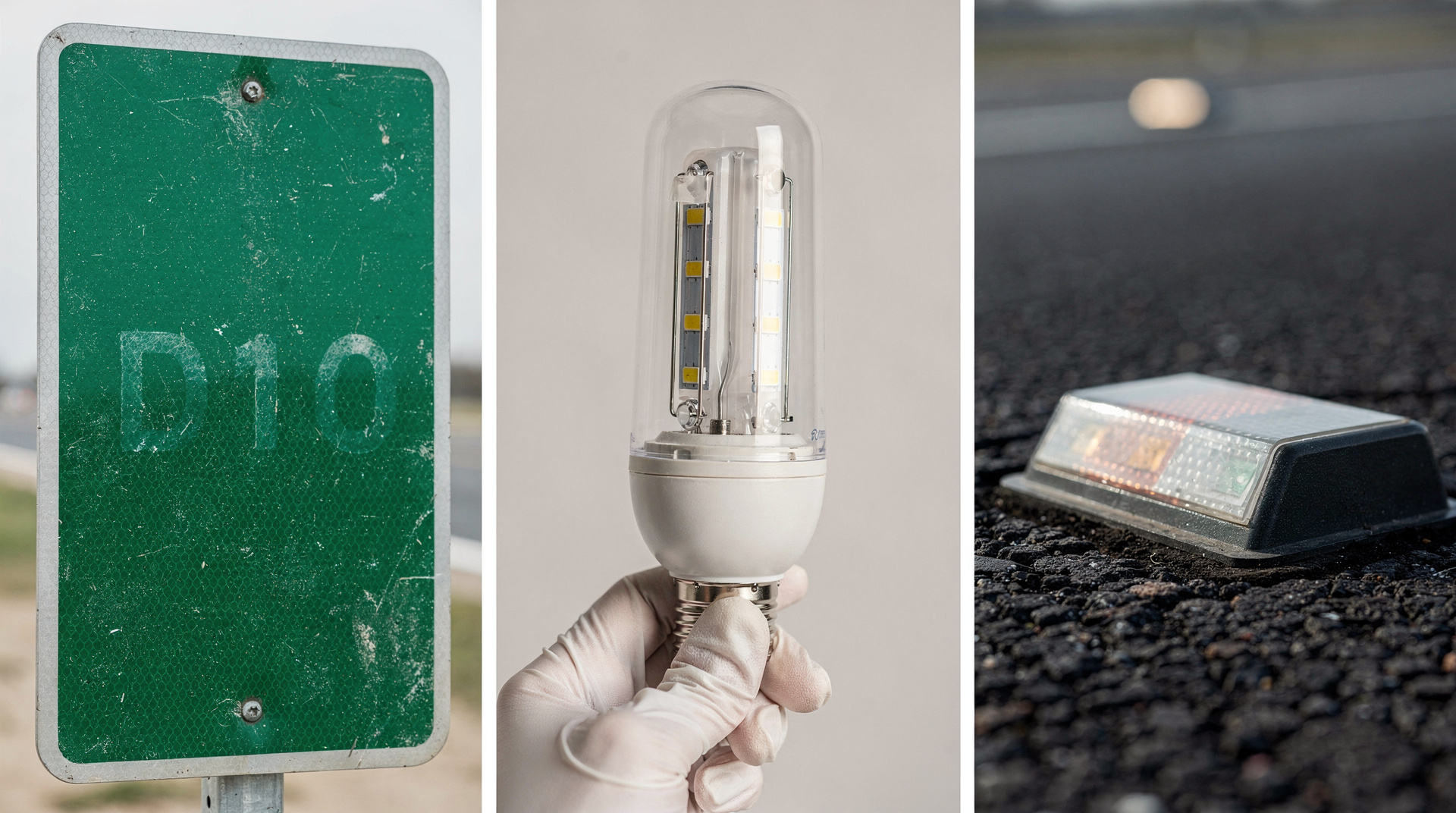
A roadside box cannot run
on the old energy bill.
Putting compute and comms in a reflector at the side of a highway has been engineered before. It never shipped at scale because the energy envelope did not close. The ThermoEdge Compute Fabric is what closes it.
Math moved into hardware.
Each mathematical primitive the unit needs — signal processing, inference, routing, crypto — runs on the substrate whose physics performs it natively. The operation count of the energy bill collapses before the operation runs.
Reduces the per-operation cost
Energy-optimized substrates.
Reversible logic recovers a fraction of switching energy each cycle. Neuromorphic spiking computes only on events. Stochastic substrates emit distributions instead of inventing them. Idle silicon at the side of a highway is not paying an always-on tax.
Brings the harvest into range
One stack, chip to compiler.
The radios, the inference, the security, the harvesting, and the runtime are co-designed as one artifact. Energy, compute, and communications come out of one install because they came out of one design. The Unified Design Architecture is what lets the module ship as a single thing.
Removes the negotiation tax between layers